
Creating Connections for Nature: Ballincollig's Pollinator Corridor
For several years, Ballincollig Tidy Towns has been working to create a greener, more biodiverse town through the development of its Pollinator Corridor. Stretching across Ballincollig and connecting key green spaces, this initiative helps pollinating insects move safely between feeding and nesting habitats while creating a richer natural environment for everyone to enjoy.[1][2]
The initiative aligns closely with the objectives of the All-Ireland Pollinator Plan, coordinated by the National Biodiversity Data Centre to create landscapes where pollinators can survive and thrive. One-third of Ireland's wild bee species are threatened with extinction, largely due to habitat loss and the reduction of food and nesting resources.[3][4]
A journey several years in the making
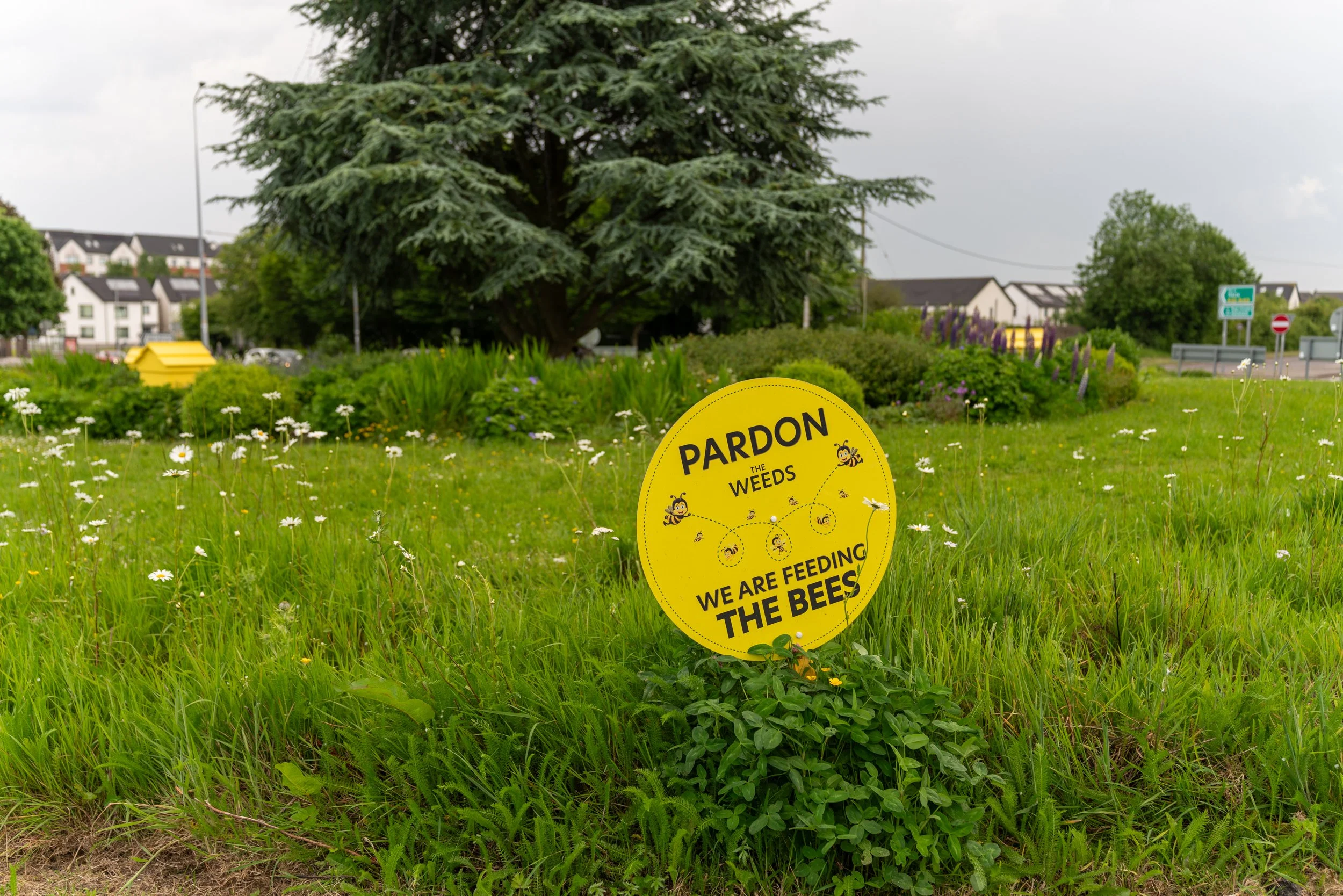
Ballincollig's pollinator journey did not happen overnight. In a feature published by the All-Ireland Pollinator Plan, Ballincollig Tidy Towns Chair Tom Butler, described how the town's approach to planting, biodiversity and sustainability evolved significantly following participation in Entente Florale 2006. This experience encouraged a new way of thinking about how landscapes are managed and the important role communities can play in supporting nature.[1]
One of the earliest successes was the transformation of a major roundabout at the entrance to Ballincollig into a pollinator-friendly planting scheme. Working with local partners and using environmentally friendly management methods, the redesigned planting quickly attracted bees and other pollinating insects, demonstrating the benefits of biodiversity-focused landscaping.[1]
Exploring the Pollinator Corridor
To help residents and visitors discover the initiative, Ballincollig Tidy Towns developed an interactive Pollinator Corridor Map that showcases many of the pollinator-friendly sites located throughout the town. [2]
To access the map click on this link 👉 https://www.ballincolligtidytowns.ie/ballincollig#interactive-map-1
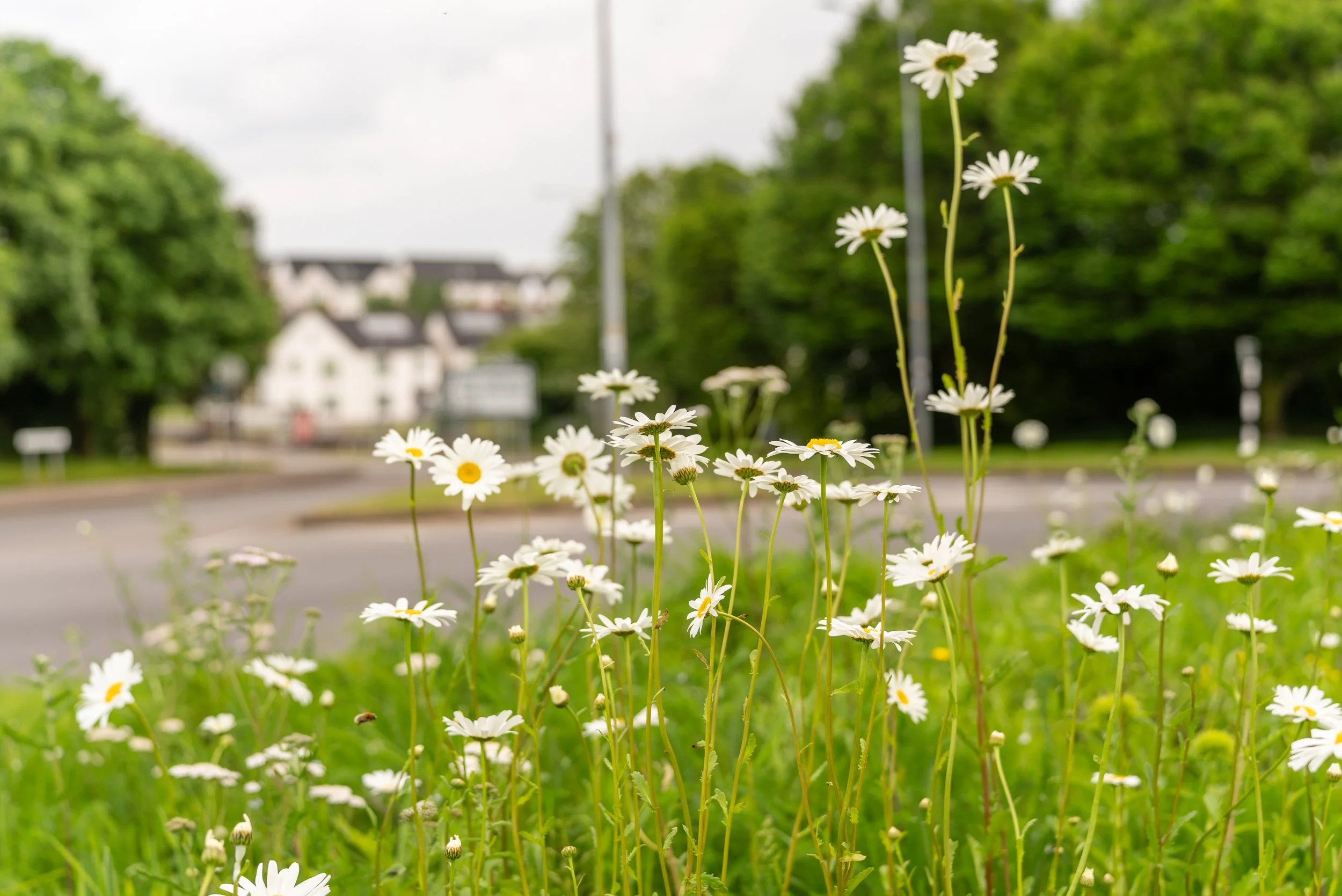
The map highlights a variety of biodiversity projects, including wildflower areas, pollinator-friendly planting schemes, green spaces and habitat creation projects. These sites form a connected ecological network that supports wildlife while enhancing the appearance and environmental value of Ballincollig.[2]
Why ecological corridors matter
The All-Ireland Pollinator Plan emphasises the importance of creating ecological corridors that connect habitats and allow pollinators to move safely through urban and rural landscapes. Rather than isolated pockets of biodiversity, connected habitats provide a series of feeding and nesting opportunities across a wider area.[5]
Ballincollig's Pollinator Corridor demonstrates how this concept can be successfully applied at community level. Through collaboration between residents, businesses, schools, community groups and Cork City Council, areas that might once have been disconnected are now helping to support biodiversity across the town.[1][5]
Looking ahead
The Pollinator Corridor continues to grow as habitats mature and new opportunities emerge. It reflects Ballincollig Tidy Towns' long-standing commitment to biodiversity, sustainability and environmental stewardship.
Most importantly, it shows what can be achieved when a community comes together with a shared vision. Every pollinator-friendly garden, flowering planter, native hedge and community green space contributes to a healthier landscape for pollinators and people alike.
We encourage everyone to explore the interactive map and discover how Ballincollig is helping create a more connected future for nature.
Photo Credit: Vitaliy Makhnanov, Media Producer, All About Us Video, IPPVA Member.
References
[1] All-Ireland Pollinator Plan (2021) Creating a Pollinator Corridor in Ballincollig. Available at: https://pollinators.ie/creating-a-pollinator-corridor-in-ballincollig/ (Accessed: 22 July 2026).
[2] Ballincollig Tidy Towns. Nature and Biodiversity. Available at: https://www.ballincolligtidytowns.ie/our-work-nature-and-biodiversity (Accessed: 22 July 2026).
[3] All-Ireland Pollinator Plan. All-Ireland Pollinator Plan. Available at: https://pollinators.ie/ (Accessed: 22 July 2026).
[4] National Biodiversity Data Centre (2021) All-Ireland Pollinator Plan 2021-2025. Available at: https://biodiversityireland.ie/app/uploads/2021/03/FINAL-All-Ireland-Pollinator-Plan-2021-2025-WEB.pdf (Accessed: 22 July 2026).
[5] All-Ireland Pollinator Plan (2024) Ecological Corridors. Available at: https://pollinators.ie/ecological-corridors/ (Accessed: 22 July 2026).