
Harvesting Every Drop: Sustainably Watering Ballincollig
When visitors admire the colourful floral displays that brighten Ballincollig throughout the summer, they often see the end result but not the innovative sustainability project working quietly behind the scenes.
For many years, Ballincollig Tidy Towns has operated a rainwater harvesting system that helps water approximately 130 flower planters across the town. Developed by local volunteers, the project demonstrates how practical community action can reduce water consumption, lower costs and make better use of natural resources.
An idea born from observation
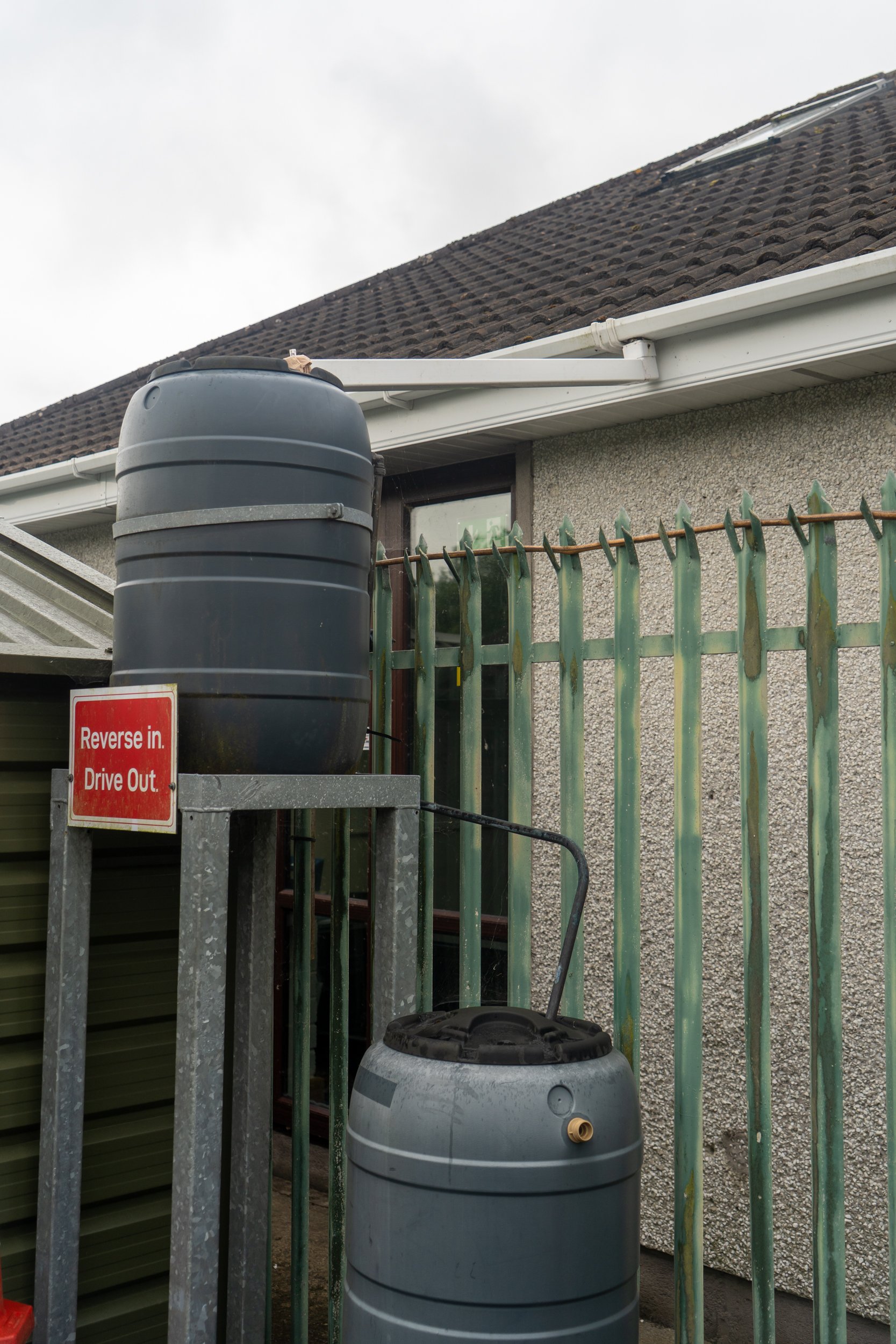
As part of the Community Allotments project, Ballincollig Tidy Towns was provided with an enclosed area behind Scoil Barra to store equipment and materials. Volunteers noticed that large volumes of rainwater falling on the school's roof were flowing directly into the drainage system.
Rather than allowing this valuable resource to go to waste, a group of volunteers devised a simple but effective solution: capture the rainwater, store it and use it to support the town's extensive planting programme.
Building the system
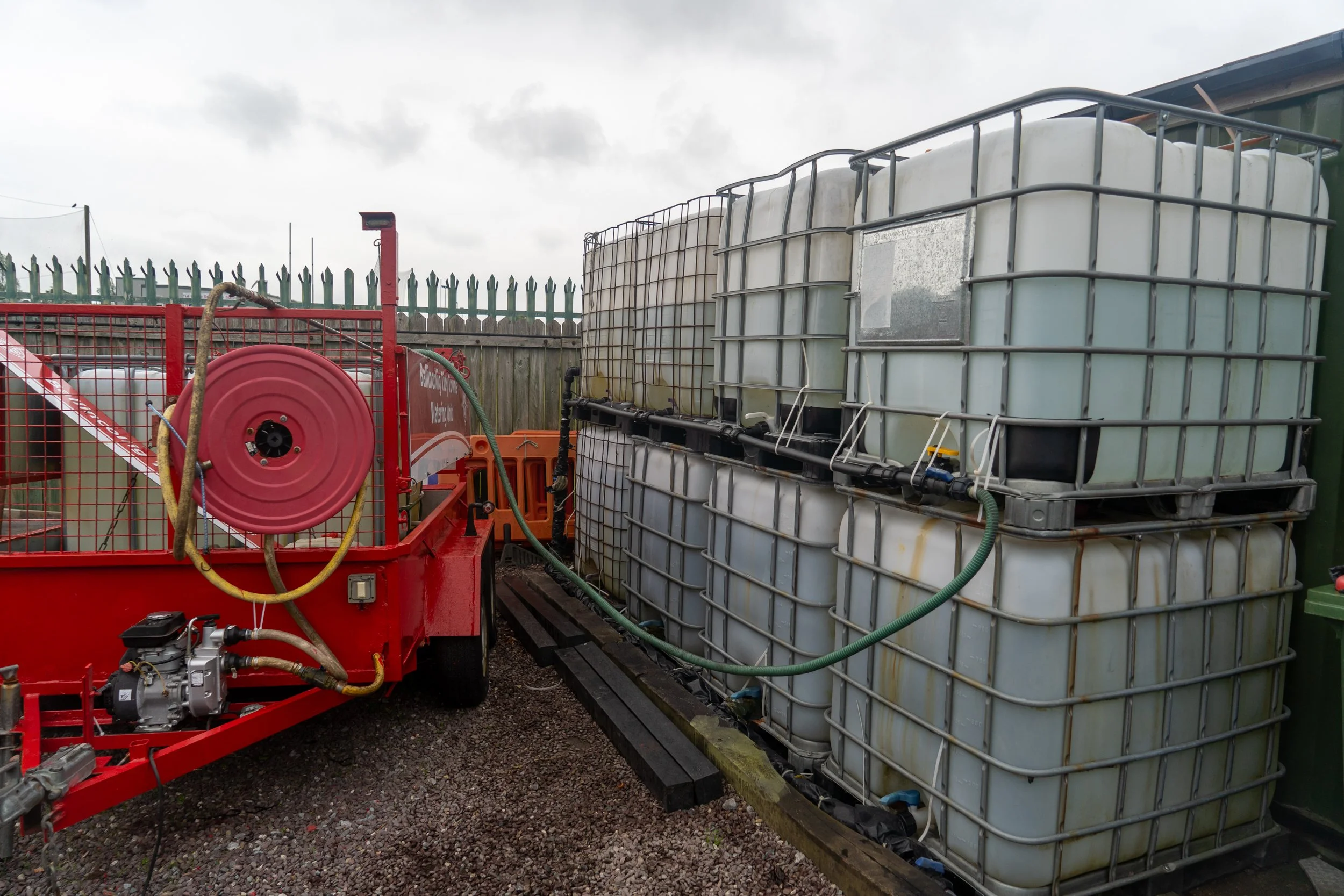
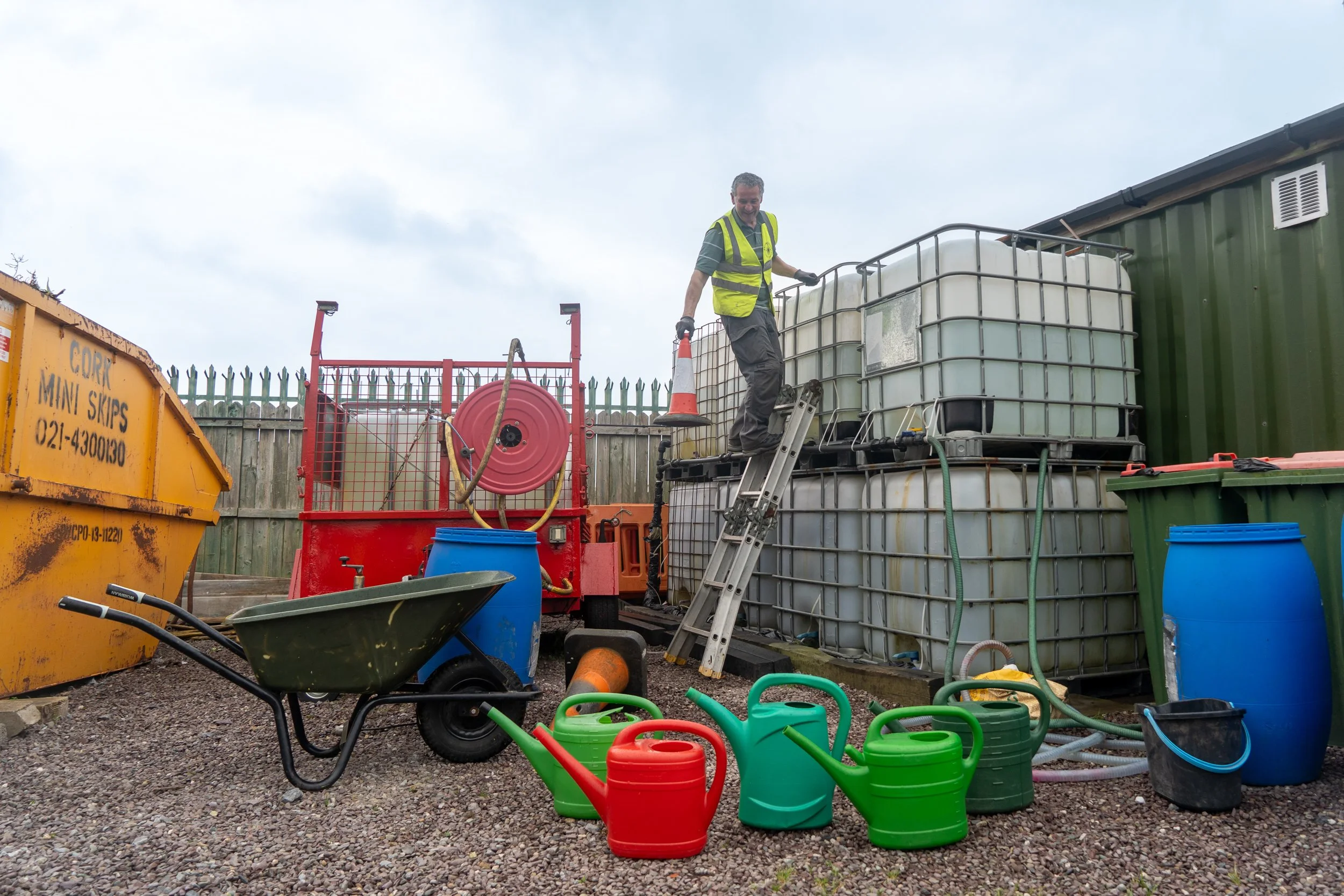
The system begins with rainwater collected from the roof of Scoil Barra. This water is channelled into a specially designed "tank farm" consisting of eight interconnected Intermediate Bulk Container (IBC) tanks that were generously donated to the project.
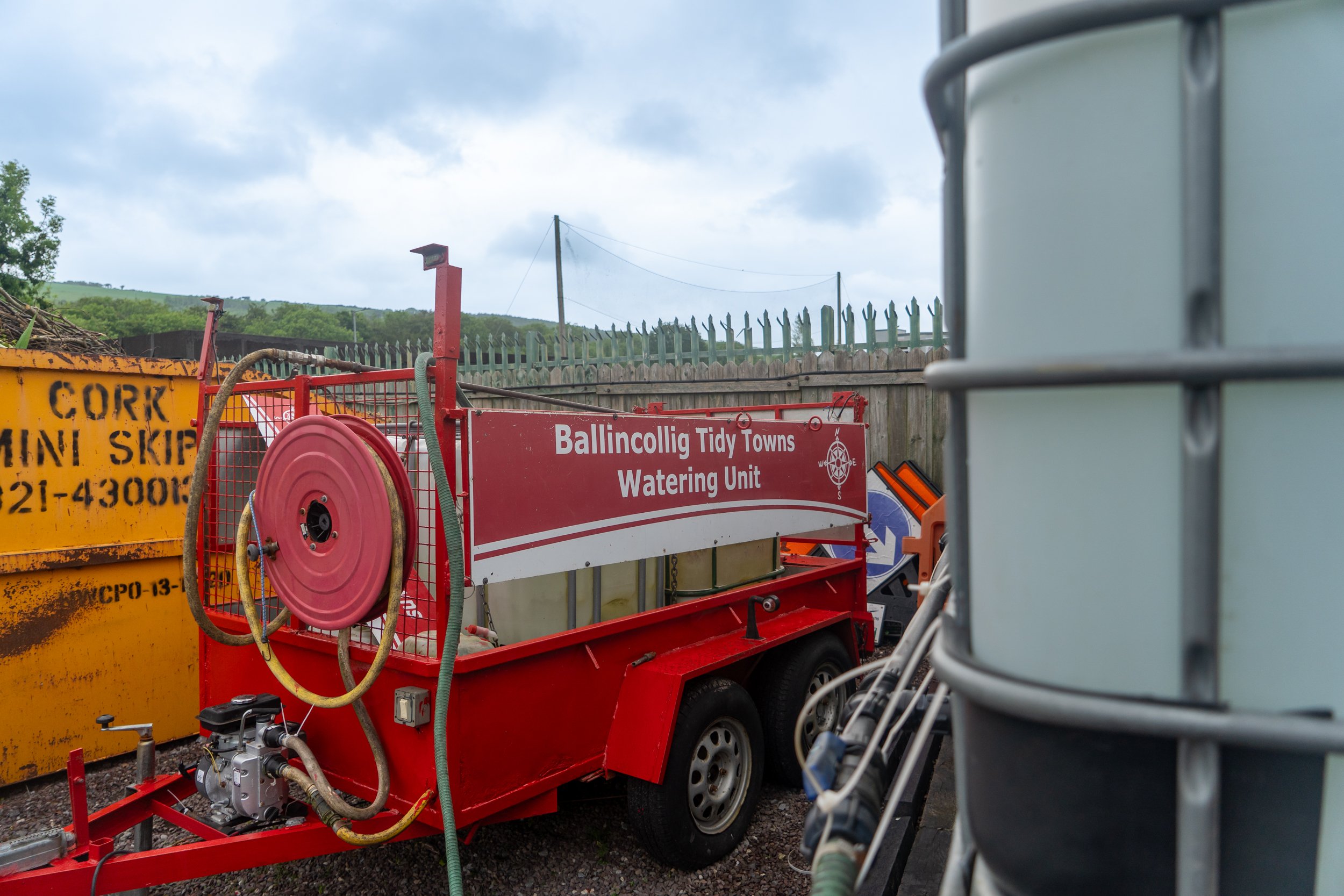
By linking the tanks together, volunteers created a storage capacity of approximately 10,000 litres. A solar-powered charging system keeps a battery topped up, which in turn powers a pump used to transfer water from the storage tanks into a mobile water tanker.
This tanker is then used throughout the summer and autumn months to water flower planters located across Ballincollig, helping to keep displays vibrant during dry periods.
The initiative received recognition in the National Tidy Towns adjudication report 2019:
"We noted your allotments and see that rainwater water is collected from the adjacent school roof. The Ballincollig TidyTowns watering unit is excellent.”
Why rainwater harvesting matters
Rainwater harvesting is increasingly recognised as an important sustainability measure. Instead of relying solely on treated drinking water for landscaping and gardening, harvested rainwater provides a natural alternative for irrigation. Rainwater is particularly suitable for plants and gardens, while also helping to reduce overall demand on public water supplies.
Capturing rainwater also helps manage stormwater runoff by slowing the volume of water entering drainage systems during periods of heavy rainfall. This contributes to more sustainable water management and supports wider climate resilience objectives. [1][2]
Community innovation in action
What makes the Ballincollig project particularly special is its simplicity. There was no major infrastructure investment or complex technology. Instead, the system was designed and implemented by volunteers who identified a local opportunity and found a practical solution.
The use of donated tanks, solar energy and existing infrastructure demonstrates how community groups can develop environmental projects that deliver long-term benefits while making efficient use of available resources.
Supporting a greener Ballincollig
The rainwater harvesting system has become an important part of Ballincollig Tidy Towns' approach to sustainability. Every litre of harvested rainwater used to maintain floral displays is a litre that does not need to come from treated mains supplies. In addition, the initiative helps create the attractive streetscapes and public spaces that residents and visitors enjoy each year.
As communities everywhere look for ways to reduce environmental impact and adapt to changing weather patterns, this long-running initiative shows that some of the most effective solutions can be found through local knowledge, creativity and community spirit.
Ballincollig's rainwater harvesting project is a reminder that sustainability is often about seeing value in everyday resources and in this example, ensuring that not a single drop of this precious commodity goes to waste.
Photo Credit: Vitaliy Makhnanov, Media Producer, All About Us Video, IPPVA Member.
References
[1] Quinn, R. (2025) Why you should be collecting and using rainwater. RTÉ Brainstorm. 28 March. Available at: https://www.rte.ie/brainstorm/2025/0328/1440204-rainwater-harvesting-collection-water-conservation-floods-droughts/ (Accessed: 20 July 2026).
[2] Royal Horticultural Society (RHS) (n.d.) Collecting, storing and reusing water. RHS Advice. Available at: https://www.rhs.org.uk/garden-jobs/water-collecting-storing-and-using (Accessed: 20 July 2026).